If you opened LinkedIn a few years ago, you would hardly find a doctor on your feed. It was likely a predictable mix of tech recruiters, sales professionals celebrating “wins,” and corporate executives sharing leadership aphorisms.
Today, however, a new cohort has taken over the algorithm: physicians.
From cardiologists breaking down the latest clinical trial data to surgeons sharing raw reflections on burnout and “leadership in the OR,” medical professionals are posting at an unprecedented rate. Historically, the medical community viewed self-promotion and social media with a healthy dose of skepticism, even disdain.
Traditional ethics dictated that a doctor’s reputation should be built quietly through patient care and peer-reviewed journals, not likes and shares. But a major cultural, economic, and professional paradigm shift has occurred.
Doctors are no longer just treating patients; they are building brands. And that DOESN’T mean that they aren’t genuine. If they are getting a platform to showcase their expertise and bust the medical myth, it’s good for society overall, too, isn’t it?
Here is a deep dive into why doctors are leveraging LinkedIn, and exactly how you can join them if you are looking to build your own digital medical footprint.
Part 1: Why Are Doctors Spending More Time on LinkedIn
The influx of physicians on LinkedIn isn’t a random trend; it is a calculated response to a changing healthcare landscape. Five distinct drivers explain this phenomenon:
1. The Great Escape: Transitioning to Non-Clinical Careers
Physician burnout is at an all-time high.
Driven by administrative burdens, electronic health record fatigue, and the commoditization of medicine, many doctors are looking for life beyond the 12-hour shift.
LinkedIn is the premier marketplace for corporate healthcare. Doctors are leveraging the platform to transition into or consult for HealthTech startups, artificial intelligence companies, venture capital firms, and pharmaceutical companies.
By publishing insights on clinical workflows or digital health gaps, doctors signal their corporate readiness to recruiters who desperately need medical expertise to validate their products.
2. Digital Referral Networks and Thought Leadership
For specialists, such as neurosurgeons, oncologists, or reproductive endocrinologists, the primary source of business isn’t a Google ad; it’s a referral from another doctor.
By posting complex case studies, sharing successful surgical outcomes, or translating newly published medical literature into digestible insights, doctors build immense credibility among their peers.
When a primary care physician needs to refer a patient with a rare condition, the specialist who regularly pops up on their LinkedIn feed with insightful commentary is often the first person they contact.
3. The Digital CV and Media Scouting
A framed diploma on a clinic wall is absolutely non-negotiable. But a highly active LinkedIn presence, on top of that, can serve as a living, breathing resume.
Medical conferences looking for keynote speakers, traditional media outlets (like CNN or the New York Times) seeking expert commentary, and academic institutions hunting for research collaborators no longer scroll through medical registries. They search LinkedIn keywords.
4. Combating the Infodemic
The digital world is flooded with dubious health advice, medical misinformation, and unqualified “wellness gurus.”
Many doctors view “digital advocacy” as a modern extension of their Hippocratic Oath.
They use LinkedIn, a platform that prioritizes verified professional identities, to publish evidence-based medicine, debunk popular health myths, and advocate for public health policy.
5. Entrepreneurship and Practice Growth
For physicians running private practices, direct primary care (DPC) clinics, or aesthetics medspas, LinkedIn is a highly lucrative marketing funnel.
Unlike TikTok or Instagram, which lean younger and more casual, LinkedIn targets white-collar professionals, corporate executives, and HR administrators. The exact demographics capable of paying out-of-pocket for premium healthcare services or negotiating corporate wellness partnerships.
Are you a Doctor Planning to build your LinkedIn personal brand?
Here’s Your 3-Month LinkedIn Starter Pack for Doctors
If you are a medical student, resident, or attending physician looking to build your professional brand, navigate the platform without looking “cringe,” and unlock new career opportunities, here is your step-by-step roadmap for your first 90 days.
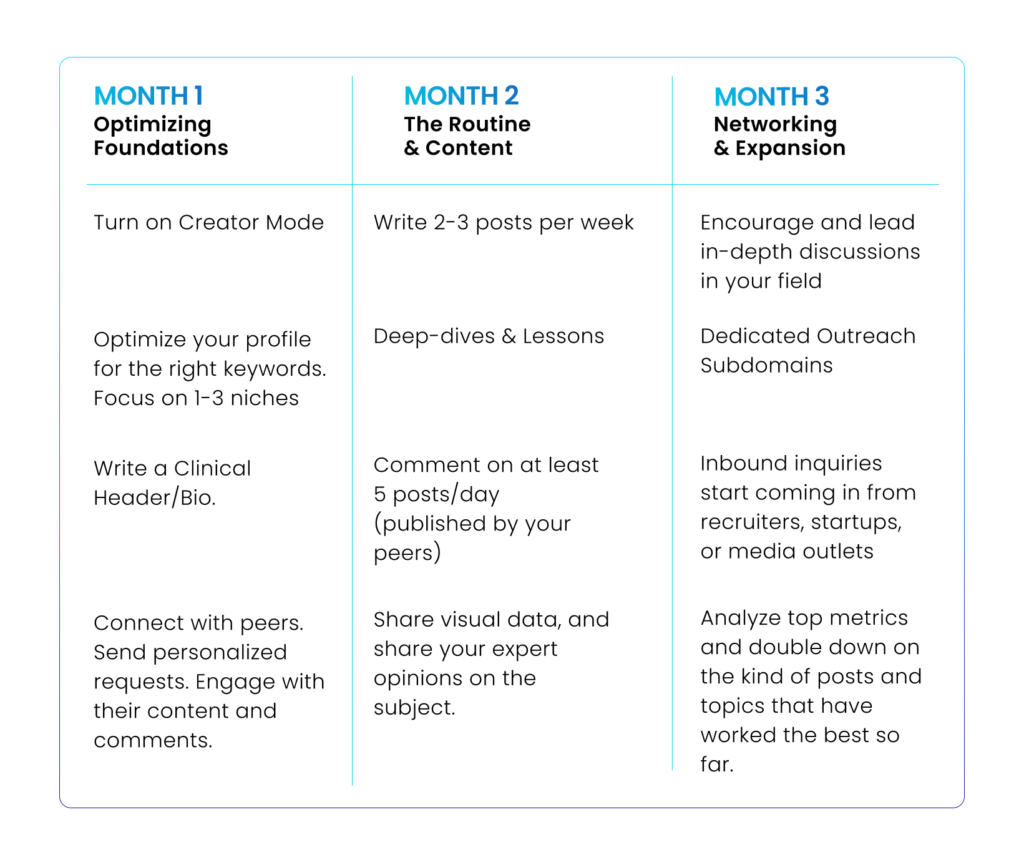
Month 1: Optimizing the Foundation & Listening
Your first 30 days are not about going viral; they are about setting up your digital storefront and observing the landscape.
- Action 1: Turn on Creator Mode.
This changes your “Connect” button to “Follow,” allows you to display your medical specialties as hashtags under your bio, and unlocks advanced analytics.
- Action 2: Fix Your Profile (The Headline Test).
Do not just write “Attending Physician at X Hospital.” Use the formula: [What you do] + [Who you serve] + [The impact you make/Your niche]. * Example: “Pediatric Cardiologist | Helping parents navigate congenital heart defects | Digital Health & AI Advisor.”
- Action 3: Pick Your Niches (Max 2).
You cannot be all things to all people. Choose two areas to talk about. For instance: Interventional Cardiology and Physician Wellness, or Medical Residency Tips and Clinical Research.
- Action 4: The 5×5 Commenting Rule.
Before you even publish your first post, find 5 prominent voices in your medical niche. Every day, leave a thoughtful, value-added comment on one of their posts. This borrows their audience and gets your name noticed by the algorithm.
Month 2: Finding Your Voice and Consistency
Now that your profile looks professional and you understand the platform’s tone, it’s time to start publishing. Aim for 2 to 3 high-quality posts per week.
- Post Style 1: The “Case Study” (De-identified). Share a clinical scenario (fully HIPAA compliant, altering all identifying details) and explain your thought process. What did the textbook say to do versus what did you actually have to do?
- Post Style 2: The “Behind the Curtain” Lesson. Share a personal reflection. What did a patient teach you this week? How do you manage stress before a difficult procedure? Vulnerability builds deep trust.
- Post Style 3: The Translation. Take a dense, 30-page study recently published in a journal and break it down into 5 bullet points that a busy professional or a GP can read in 30 seconds. Use charts or infographics if possible- visual assets perform incredibly well.
Also read: Stop Posting Daily: The Smarter Way to Grow on LinkedIn in 2026
Month 3: Networking, Outbound Engagement, and Iteration
By Day 60, you will have a small library of content. Month 3 is about accelerating your reach and leveraging your visibility into real-world opportunities.
- Action 1: Pitching the Media and Conferences. Look for medical podcasters, conference organizers, or healthcare journalists on LinkedIn. Send them a personalized message pointing to a specific post you wrote, offering yourself as a resource or a future guest.
- Action 2: Audit Your Analytics. Look at your top three best-performing posts from Month 2. Did your audience love your career advice, or did they engage more with your breakdown of healthcare tech? Double down on what works and cut out what doesn’t.
- Action 3: Protect Your Reputation. As your audience grows, you may encounter trolls or medical disagreements. Establish a personal rule: Never argue medicine in a public comment section. If someone disagrees disrespectfully, block or ignore. Keep your brand entirely professional.
Conclusion: The New Medical Currency
The days of a physician’s reputation being confined strictly to the walls of their hospital or local clinic are over.
In the modern era, a doctor’s digital footprint is a form of professional currency. Whether you want to climb the academic ladder, launch a medical startup, escape clinical burnout, or simply protect the public from dangerous medical misinformation, LinkedIn can be your ultimate megaphone.
Step up, optimize your profile, share your expertise, and become an authentic voice in your medical field.
Because if you don’t tell your story online, quite possible someone less qualified will gladly do it before you.
Having a time crunch to plan your LinkedIn presence?
Opt for a free 30-min personal branding consultation call.