For years, B2B founders and CEOs viewed LinkedIn as a digital Rolodex.
A place to park a resume or occasionally share a press release about a new funding round. But as we move deeper into this decade, that passive approach has become a significant liability.
If you are a CEO or Founder sitting on the sidelines today for “staying private” or “focusing on the product,” or whatever the reason might be. Ultimately, you are paying a silent, compounding, and increasingly expensive fee on every lead your company tries to generate.
We call this the Trust Deficit.
Basically, when you run paid ad campaigns from your business page, without warming up or nurturing your audience beforehand, you come off as a stranger whom they don’t trust.
The Hidden Cost of a Founder’s Silence on LinkedIn
Many B2B leaders, especially in traditional businesses, feel a false sense of revenue security.
They look at their current dashboard and see a pipeline that looks healthy. They see word-of-mouth referrals trickling in and conclude that their reputation is doing the work for them.
But relying on yesterday’s momentum is a dangerous game in a market that 2026 has become.
Without constant, visible authority on platforms like LinkedIn, you are essentially ceding your market territory to whoever speaks the loudest.
In a vacuum of leadership, your competitors, even those with a literal “worse” product, will win the market’s attention simply because they are present.
When Do B2B Companies Realize That They Should’ve Started Sooner?
When everything is going fine, you don’t realize what you are missing out on by not being vocal on LinkedIn
The true cost of staying idle is realized the moment you try to scale.
When you finally decide to turn on the faucet of paid ads or aggressive outbound sales, you’ll find the ground is frozen.
Because you haven’t pre-warmed the market with a personal brand, every click is more expensive, every cold email is more easily ignored, and every sales cycle is longer.
You are forced to pay the “Trust Deficit Tax” in the form of higher Customer Acquisition Costs (CAC) because you’re starting from zero trust with every new prospect.
Loosening the Soil: Why Personal Branding Must Precede Sales
In agriculture, you cannot plant seeds in packed, dry earth and expect a harvest. You have to loosen the soil first.
The same logic applies to B2B growth. A founder’s personal brand is the tool that tills the market.
When a CEO shares insights, challenges the status quo, and demonstrates a deep understanding of their customer’s pain points, they are basically “loosening the soil” in their target market.
They are making the market receptive. By the time a sales rep reaches out or a LinkedIn ad appears in a prospect’s feed, you have already dismantled the distrust wall between your company and your ICP, which could have hindered your lead generation.
When the founder or a group of leaders of a B2B company show up on LinkedIn actively, their prospect isn’t looking at a stranger anymore.
They are looking at a solution backed by a person they’ve been learning from for months.
“But Isn’t My Business Page Enough for B2B Branding?”
In short, no. For two reasons.
1. LinkedIn’s business page reach is dead
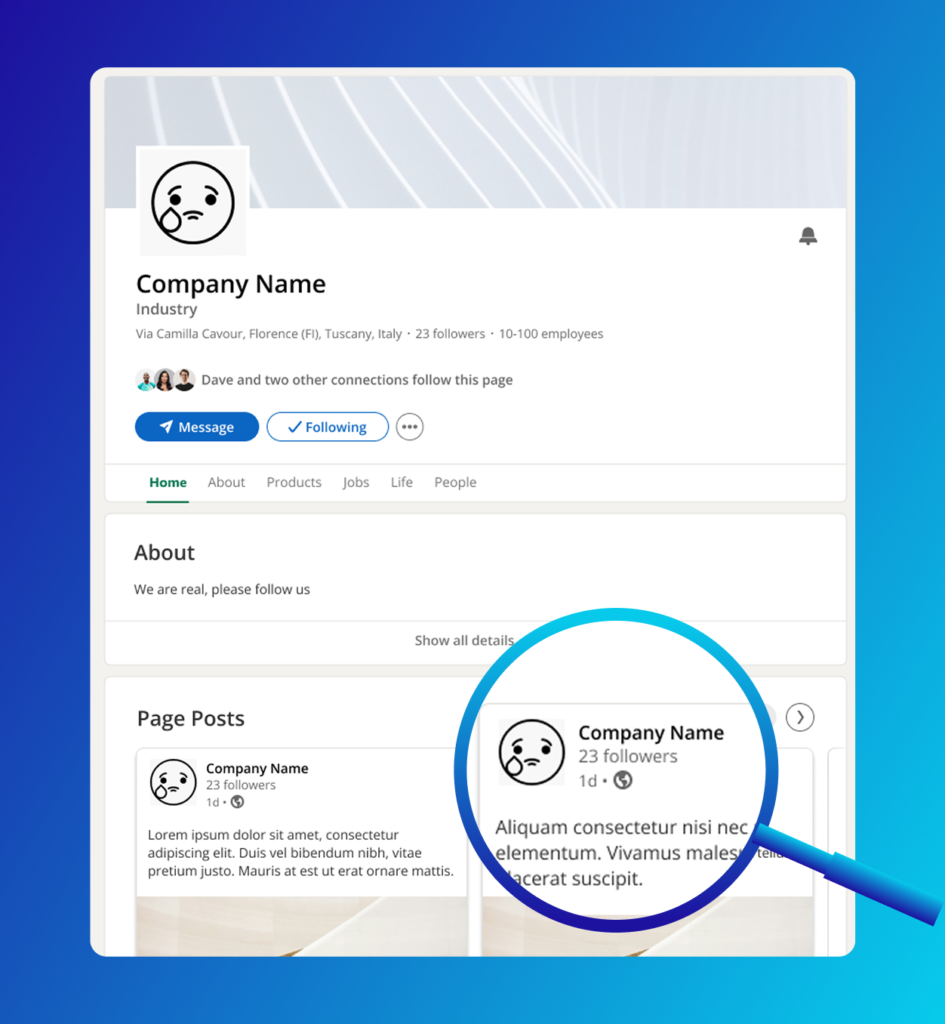
If you’ve tried posting organic content from your business page on LinkedIn, you must have noticed how frustratingly low the impressions are.
That’s deliberate. LinkedIn wants its share of your ad revenue. So, it encourages you to run ads. And keeping your page’s reach dead is one of the tactics it uses to do that.
So, even if you post regularly from your business page and don’t see the needle budging… know that it’s not your fault.
It depends on many factors, and LinkedIn’s intention is one of them.
2. Customers respond to a human face far better than a company logo
Why do you think B2C advertising has been using so many ranges of emotions and human psychology to entice its audience?
Remember the iconic TV commercials? Or when your movie actor advertises a soft drink? Why do these kinds of commercials stick with you?Because you connect emotionally with humans, stories, and emotions.
But B2B is still figuring out how to utilize human emotions in marketing.
For now, LinkedIn’s personal branding has surely given us a path to capitalize on the human factor in B2B advertising.
And since B2B buyers are less likely to take a movie actor seriously, they are looking for a real voice coming from a leader who genuinely understands their problem.
This is why your LinkedIn ads give significantly better ROI when your founders or leadership have gained a certain reputation on LinkedIn.
A real case study to back this argument
We saw this exact dynamic play out in our work with CyberNet, a high-growth telecom provider.
Like many infrastructure companies, they were leaning heavily into technical excellence but lacked a visible “human” face at the top. We shifted the strategy to move their CEO from the background to the forefront of the industry conversation.
We didn’t just “get likes” or optimize a profile for the sake of vanity. We aligned a consistent LinkedIn presence with a full-funnel growth strategy.
By tilling the soil through the CEO’s authority, we began generating 4-5 qualified leads per week. The sales team found that conversations moved faster, and the marketing team saw a massive jump in ad visibility because the “Trust Deficit Tax” had been waived.
How to Stay Relevant and Visible on LinkedIn in 2026 (Without Losing Your Soul)
Building a personal brand doesn’t mean you have to spend four hours a day on your phone or become a “lifestyle influencer.” It means being a strategic authority. Here are our “hot tips” for staying relevant in a noisy market:
Don’t use AI too much. Or at least don’t make it too obvious.
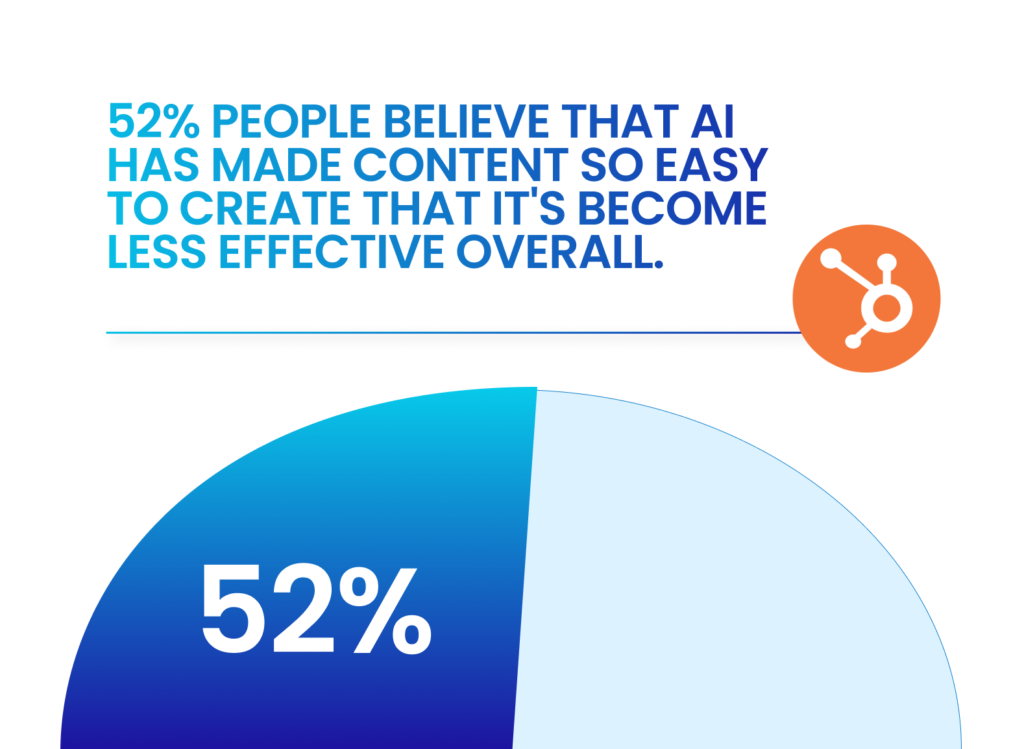
In February of this year, HubSpot released a startling statistic: 52% people believe AI has made content so easy to create that it’s become less effective overall.
Basically, AI-generated and copy-pasted content is plummeting the quality of the Internet overall.
The same applies to LinkedIn as well.
This is happening because people are taking shortcuts in storytelling and writing. But it doesn’t work that way. Why would anybody want to spend their precious time on reading something full of fluff and no unique value?
AI is a brilliant tool for summarizing a 40-minute podcast into bullet points or checking your grammar. But don’t let it do your thinking for you.
Your audience doesn’t want to know what a Large Language Model thinks about the future of your industry. They want to know what you think.
Share your war stories, your failures, and the contrarian opinions that a bot would be too polite to suggest.
2. Stand on the Desk
In a sea of beige content, neutrality is a death sentence.
To stay relevant, you need a little bit of attitude. If you see a trend in your industry that is total nonsense, say it. If you have a philosophy that contradicts the “standard” way of doing things, shout it. Be the person standing on the desk. Polarization (within reason) creates attraction.
3. Build a Brand Voice and Guard It
Consistency is the bedrock of trust. Whether you are posting a short observation or a long-form article, your voice should be unmistakable. Is your brand voice academic and rigorous? Is it punchy and disruptive? Is it empathetic and mentor-like? Choose your “vibe,” stick to it, and ensure it remains consistent across every touchpoint.
To Conclude
Always remember: A vocal founder makes their company’s future marketing campaigns hit 10x harder.
If you are planning to run ads later this year, start posting today. Think of every post as a “pre-payment” on your future ad ROI. When your face is familiar, your “Cost Per Click” drops because your “Trust Per Click” is higher.
Got no time to do effective personal branding on your own?
When we say we get into our clients’ shoes to see the world from their POV, here’s how we do it:
- We read their favorite books,
- We listen to the podcasts they are listening to.
- We follow and read from the industry leaders, who are inspired by
- And we send them a questionnaire and journal prompts to pick their brains.
That’s how you grow on LinkedIn in 2026.
Because sadly, there’s still no shortcut to an exceptional personal brand!