
The cost of a single B2B click on LinkedIn has officially reached a tipping point.
In the 2026 market, if you are targeting North American or Western European enterprise decision-makers, such as CIOs, VPs of Operations, or Heads of Infrastructure, you can easily expect a median Cost Per Click (CPC) ranging from $10 to $12+
Yet, many B2B marketing teams continue to dump their entire paid media budget into standalone LinkedIn Ad campaigns.
You launch cold single-image ads or form-fill offers into a vacuum, expecting a buyer to see an ad, click it, and sign a six-figure contract.
It isn’t working anymore. The standalone LinkedIn ad is officially breaking corporate budgets.
The structural reality of modern B2B buying is complex. The average enterprise transaction now involves a group of six to ten distinct stakeholders. Furthermore, the customer journey from a buyer’s first digital touchpoint to closed-won revenue spans an average of 272 days. When you run LinkedIn Ads in isolation, you are asking a single, high-cost platform to carry the massive structural weight of an entire multi-touch demand generation pipeline.
To win in 2026 without blowing your budget, you have to outsmart old paid media playbooks. You must stop viewing LinkedIn Ads as a self-contained silo and start treating it as an account-influence layer.
Here is the strategic framework for coordinating LinkedIn Ads with an ecosystem of organic presence, targeted nurturing, and direct sales outreach- all designed to operate efficiently within a tight budget.
Phase 1: Establish an Organic Foundation (Before You Spend a Dime)
If you launch a paid LinkedIn ad campaign and your brand’s organic presence looks like a ghost town, your conversion rates will tank. Before a buyer fills out a multi-million-dollar proposal form, they will click through to your company page and look up your executive team to check for real-world trust signals.
You must think ahead and lay down a groundbreaking organic foundation before turning your ads live. This organic engine requires two components:
1. The Dynamic Corporate Page
If you are thinking that the company page’s organic reach is dead and absolutely useless, you have to read this latest report by Semrush. It reveals that AI tools are also citing the company page content in their answers.
In fact, Perplexity cites company page content as often as 59% of the time.
Which basically means that your company page’s organic content is not at all useless, even if it doesn’t give you instant reach. You have to come up with really valuable content that your Ideal Customer Profile (ICP) would actually get hooked to, read, and share.
Hence, your company page should not look like a sterile HR bulletin board. It needs to serve as an active, educational resource hub publishing case study walkthroughs, technical breakdowns, and industry frameworks 3 to 5 times a week.
2. The Executive Personal Brand
The same Semrush report also suggests that while Perplexity is citing more company page content, tools like ChatGPT and Google AI mode cite individual creators more often (59%).
And in 2026, the LinkedIn algorithm explicitly penalizes corporate broadcasting and rewards authentic human voices. CEO and founder content generates an average of 4x higher engagement than standard corporate page updates.
When your leadership team routinely posts data-driven insights, personal lessons, or contrarian takes on industry bottlenecks, they build deep, untracked authority in the “dark funnel”. Once target prospects become familiar with your founder’s face and philosophy organically, your paid ads stop looking like cold intrusions and start feeling like natural extensions of an ongoing conversation.
Phase 2: The Coordinated Multi-Channel Orchestra
LinkedIn Ads perform at their highest level when they provide a synchronized touchpoint alongside other marketing and sales channels. When an enterprise account is exposed to a unified message across multiple mediums simultaneously, brand recall skyrockets and buyer resistance drops.
Instead of using LinkedIn to find cold leads, coordinate your platform architecture to follow this lean, multi-touch motion:
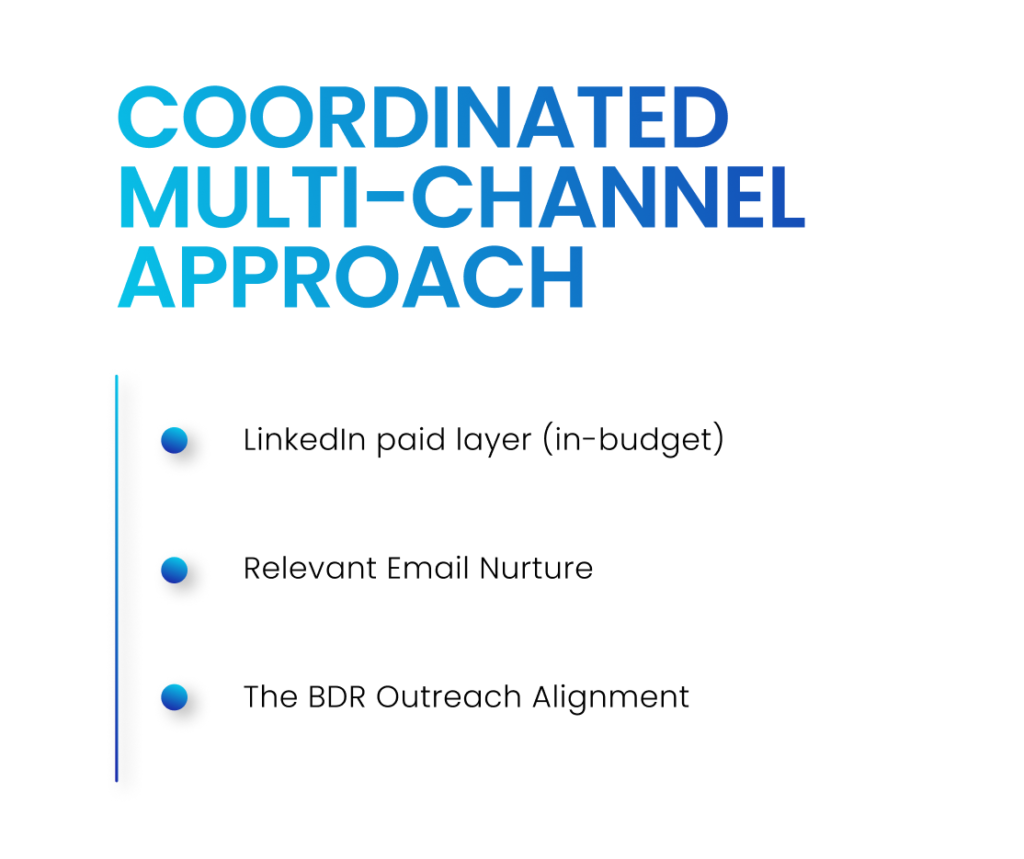 When a targeted account travels through this unified loop, the psychological impact compounds:
- The LinkedIn Paid Layer: In the above framework, we are not using the Brand Awareness ads because we are talking about building the strategy within a limited budget. Running brand awareness campaigns gets very expensive, and thus, we, at Shivyaanchi, often go straight up with Middle-of-the-funnel ads after igniting the organic reach. And if we have a certain LinkedIn post from the CEO/founder that has performed really well, we turn that post into a thought leadership ad. This way, we know that we are not throwing the dart in the dark, as it’s proven that the audience is already liking that post.
We also refrain from running BoFu ads (with CTAs like ‘Book a demo’) because it’s too salesy and might backfire, as LinkedIn users tend to respond to educational content more than direct selling content.
- The Relevant Email Nurture: Concurrently, targeted professionals within those same accounts receive hyper-relevant, value-first emails that match the exact theme of the thought leadership ads running on their feeds. The email doesn’t pitch software; it provides a highly specific diagnostic tool, a technical whitepaper, or an industry benchmark trend.
- The BDR Outreach Alignment: Finally, when a Business Development Representative (BDR) reaches out via a direct message or phone call, they don’t lead with a generic sales script. They anchor their outreach directly to the shared insights established in the email sequences and ad campaigns.
Because the buyer has already digested your founder’s organic posts, scrolled past a highly tailored Thought Leader ad, and opened a relevant piece of email content, they instantly recognize your brand name. This multi-channel familiarity can drive response rates that are up to 3x higher than single-channel, cold email outreach.
Phase 3: How to Execute This Motion on a Budget
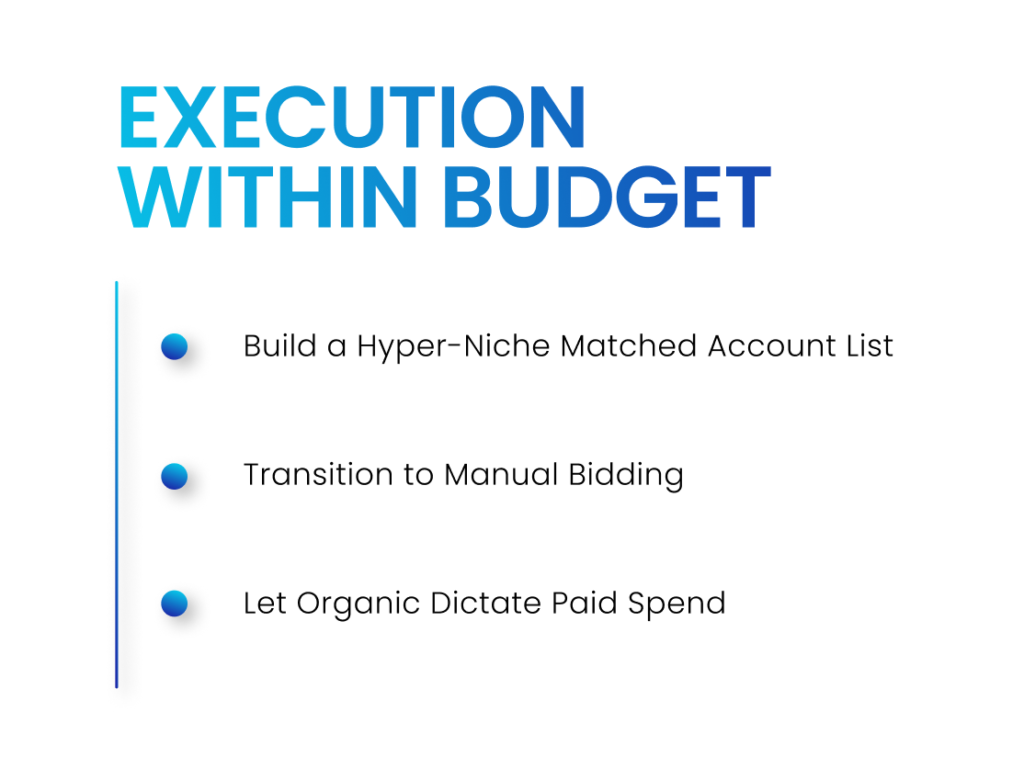
Creating a coordinated, multi-channel system sounds expensive, but it can be done cost-effectively by narrowing your focus. If you have a modest ad budget, you cannot afford to market to a broad target demographic of 50,000 general titles. You must ruthlessly limit your scale to maximize your impact.
1. Build a Hyper-Niche Matched Account List
Instead of targeting general job descriptions, upload a highly precise list of 200 to 500 “best-fit” target enterprises (Account-Based Marketing) directly into LinkedIn Campaign Manager. By shrinking your total audience size, your budget doesn’t get diluted across irrelevant accounts. It allows you to maintain a high, memorable frequency among the specific accounts that hold actual contract value.
2. Transition to Manual Bidding
Avoid choosing LinkedIn’s default “Maximum Delivery” automated bidding strategy, which is designed to consume your daily budget quickly. Instead, utilize cost per click (CPC) bidding.
3. Let Organic Dictate Paid Spend
As we discussed earlier, spending money, testing unproven creative assets in the paid auction gets extremely expensive and uncertain. Hence, pay close attention to your founder’s personal profile and corporate page metrics. When an organic text post, carousel framework, or native video experiences an unusual spike in engagement and comments, you have successfully verified its market relevance. Take that exact winning organic post, drop it into a Thought Leader Ad campaign, and back it with a paid budget to distribute it directly to your target account list.
We proved the power of moving away from isolated, top-of-funnel paid advertising during our strategic collaboration with Flyability, an indoor industrial drone manufacturer operating in a complex, compliance-heavy market.
Instead of burning capital on standalone “sell-upfront” ads to broad cold lists, we built a highly focused Middle-of-Funnel (MoFu) educational strategy on LinkedIn, zeroing in on highly specific roles like asset integrity specialists and inspection engineers. By aligning LinkedIn ad creative directly with Flyability’s technical expertise, use cases, and industry trends, we established deep institutional trust before pushing prospects down the funnel.
This targeted ad environment integrated smoothly with their internal HubSpot email sequences and direct sales outreach.
By eliminating top-of-funnel ad waste and turning LinkedIn into a coordinated influence layer, the funnel achieved a 12–20% conversion rate on content offers, a 1%+ CTR on targeted ad creative, and a consistent pipeline of 15–18 highly qualified enterprise leads every single month.
Read the full Flyability case study
Conclusion: Stop Siloing Your Paid Media
In the current market, enterprise buyers do not live in a single digital channel, and your marketing strategy shouldn’t either.
A standalone LinkedIn ad campaign is an incredibly expensive billboard trying to survive in a highly competitive auction environment.
Break your marketing assets out of their silos. Build a groundbreaking organic presence, coordinate your paid ad creative directly with targeted email workflows, and equip your BDR team with consistent, value-first messaging.
Is your standalone LinkedIn ad spend failing to generate a measurable pipeline?
For the past 12 years, we’ve been designing full-funnel, multi-channel marketing engines that connect paid ads, executive branding, and sales enablement into a high-performance system.
Let’s connect and optimize your enterprise acquisition funnel today.
Related Posts
![[ UNGATED / LOW FRICTION ] ──► E-Book / Checklist ──► High Volume / Low CPL / Low Intent vs. [ HIGH FRICTION / HIGH INTENT ] ──► Demo / Discovery Call ──► Low Volume / High CPL / High Intent](https://shivyaanchi.com/wp-content/uploads/2026/10/Frame-27193-750x500.png)
Comment (1)
Comments are closed.
How to Allocate Your LinkedIn Ads Budget Across Campaigns - Shivyaanchi
October 2, 2026[…] ALSO READ: Why LinkedIn Ads Alone Aren’t Working Anymore […]